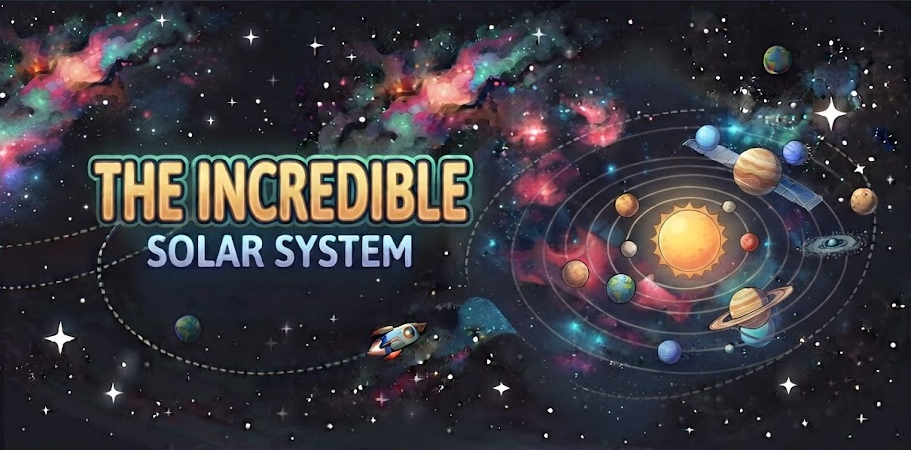
THE INCREDIBLE SOLAR SYSTEM
Learning about the Solar System is highly important because it inspires youth aged 10 to 17 to be curious about the universe and where we belong in it. Discovering planets, stars, and space gives them a bigger picture of the world and inspires them to dream about future science discoveries.
By encouraging their love for the cosmos, we are helping raise new generations who will explore, ask questions, and understand more about the amazing universe we live in. Every curious child today could grow into a scientist tomorrow!
Upon completion of this Topic1, participants will be able to:
a) Understand that our galaxy is called the Milky Way, and it is where we live. In one of its spiral arms lies our Solar System, where all the planets orbit around the Sun, including Earth.
b) Realize that the Sun is the main source of light for our entire Solar System, and that eight officially recognized planets including Earth.
c) Identify Mercury as the closest planet to the Sun and a year is 88 days long.
d) Recognize Venus as second planet from the Sun and the hottest in the Solar System because high amount of carbon dioxide which traps heat inside it.
e) Recognize that planet Earth is the unique with a suitable climatic condition, landforms a water bodies which support life in all forms.

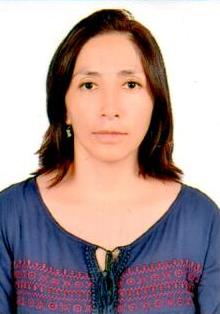
Ms. Mirella Díaz Núñez is a Geographic Engineer with a Master's degree in Geographic Information Technology and co-author of the publication "Geospatial Information Management: A Guide to Good Practices for the Implementation of Institutional Spatial Data Infrastructures." More than 13 years of experience in geospatial and georeferenced data applied to territorial analysis and disaster risk management, through the generation of digital cartography, georeferenced databases, raster and vector information, thematic maps, cartographic conditioning, thematic modeling, organization of working groups, and optimization in product development. Experience and high level of proficiency in digital, analog, and alphanumeric cartographic development programs, using remote sensing tools and geographic information systems to improve information management and support decision-making.

To provide children with information and knowledge about the Solar System is to open a window into the history and dynamics of the worlds that surround it. By learning how planets form, move, and change over time, children begin to understand that the universe is full of stories waiting to be explored. This kind of learning sparks curiosity, encourages thoughtful questions, and helps them see Earth as part of a much larger cosmic family. Studying the Solar System not only strengthens their scientific thinking but also inspires imagination, creativity, and a lifelong desire to discover more about the universe we call home.
Note:
If you are interested to be registered on the following course, please complete the application form with your personal information making click on the REGISTRATION button below and send it to receive a User & Password.

*Upon completion of the selected course, participants must take a final assessment in order to obtain their academic certificate, and they will have one hour to complete the assessment as well as two opportunities to pass it.
Availability: 2026-03-02 from to 2027-01-01
Mode: ONLINE RECORDED
Topics: 2
Lecturers: 2
Vacancies: 50